AI is everywhere. But when it comes to FRS 102 lease accounting, can it actually reduce implementation timelines?
In practice, transition speed is determined less by accounting complexity and more by data readiness. Before a single journal is posted, lease contracts must be converted into structured, audit-ready data. For many finance teams, that conversion phase becomes the bottleneck.
Why Manual Lease Data Migration Slows Transition
Manual lease data migration introduces friction at precisely the stage where control and accuracy matter most.
Contracts sit across departments in inconsistent formats. Key inputs such as lease term assumptions, escalation clauses and modification history must be identified, interpreted and structured before recognition and measurement can begin.
Where this process is manual, three consequences typically follow:
- Inconsistent interpretation of options and indexation across the portfolio
- Late identification of missing or modified inputs, often during audit review
- Weak traceability between contract terms and calculated outputs
As portfolios grow, these issues compound, extending timelines and increasing audit scrutiny before go-live.
Data migration is often the most resource-intensive phase of an FRS 102 implementation. The accounting requirements may be clear, but the data rarely is. Contracts sit across departments in inconsistent formats, requiring key terms to be identified, interpreted, and structured into a reliable register. Where information is inconsistent, reconciliation follows. Where it is incomplete, remediation becomes necessary.
As a result, senior finance teams are drawn into operational detail, interpreting contracts, correcting spreadsheets, and responding to audit queries. Instead of focusing on policy and oversight, time is diverted into reconstruction.
The practical challenge, therefore, is how to shorten this phase without compromising control or audit confidence. This is where AI can support the process by:
- Accelerating contract extraction
- Structuring lease data consistently from the outset
AI-assisted tools can help streamline this process — see our guide to AI-driven FRS lease data migration.
How AI Speeds Up Initial Lease Data Collection
Artificial intelligence shortens the longest phase of the implementation process: moving from documents to structured data.
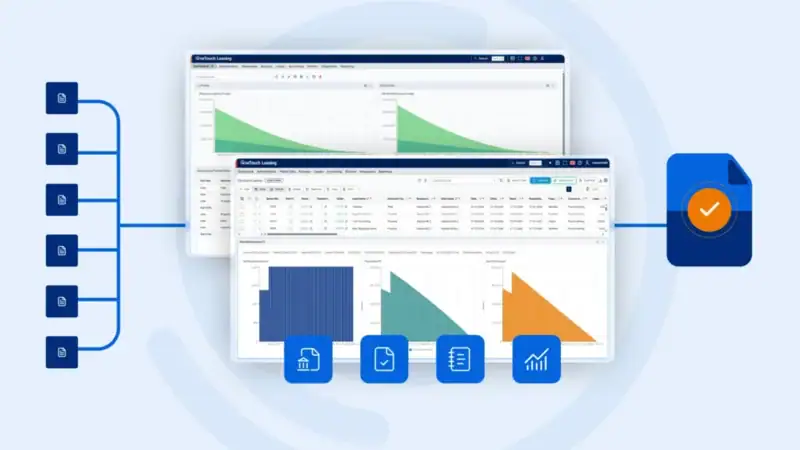
AI-enabled systems can read large volumes of lease contracts using optical character recognition (OCR), extract core lease terms into a standardised structure, and significantly reduce manual re-keying. Instead of reviewing agreements line by line, finance teams receive pre-populated data fields ready for validation.
This delivers practical time savings:
- Faster and more structured population of the lease register
- Reduced transcription errors during initial contract capture
- Earlier identification of missing, incomplete or inconsistent inputs
Importantly, AI does not replace management judgement. Lease term assessments and discount rate decisions remain finance-led. What AI accelerates is the mechanical extraction of data, allowing teams to focus their time on interpretation and policy rather than transcription.
How AI Reduces Rework and Clean-Up Later
The most significant time savings are often realised in initial extraction, but in the rework that never occurs.
AI-enabled lease accounting platforms help prevent downstream slowdowns by flagging missing or inconsistent inputs early, standardising data across the portfolio and maintaining a clear audit trail from the outset.
This reduces the likelihood of:
- Late-stage corrections before go-live
- Repeated spreadsheet adjustments
- Audit-driven rework after transition
When data is structured correctly from day one, the need for retrospective fixes diminishes. The migration process becomes shorter not simply because it is faster, but because it is more accurate.
Speeding Up Modifications, Remeasurements and Audit Queries
Under revised FRS 102, lease accounting does not end at transition. Ongoing compliance requires recalculations when leases are modified, assumptions are reassessed or auditors revisit prior-year positions.
This is where speed becomes operationally important.
AI-supported platforms track lease changes systematically, recalculate consistently and retain supporting documentation in a structured environment. Instead of reconstructing prior assumptions, finance teams can access a clear audit trail of how inputs were derived and applied.
The result is measurable:
- Faster month-end and year-end close processes across entities
- Reduced last-minute data scrambles before reporting deadlines
- More predictable and well-supported responses to audit queries
Ongoing compliance becomes structured rather than reactive.
What to Look for in an AI-Enabled Approach for FRS 102 Lease Data Migration
AI only delivers meaningful speed when it is embedded within a structured lease accounting process aligned to FRS 102 and UKI audit expectations.
When assessing AI-enabled tools, finance teams should prioritise:
- AI that reduces manual data extraction and re-keying
- Clear separation between automated data ingestion and management judgement
- Consistent data structures capable of supporting modifications and audit evidence
- Transparent audit trails from document to calculation
The objective is not automation for its own sake. It is faster data readiness without sacrificing control or audit confidence. Without these elements, automation may create speed at the front end but introduce risk later.
Accelerate FRS 102 Lease Data Migration with OneTouch Leasing
AI delivers the most value when it is embedded within a structured, UK GAAP-aligned lease accounting platform.
OneTouch Leasing combines AI-assisted contract extraction with FRS 102-compliant calculation workflows and audit-ready reporting. Lease data moves efficiently from document to structured output without spreadsheet dependency.
If you are progressing through transition, speak with our team to understand how One Touch Leasing can deliver a structured, audit-ready migration process. https://onetouchleasing.co.uk/contact-us/
Need support with your FRS 102 lease transition?
Lease accounting software built for UKI FRS 102 can help support consistent processes and audit readiness as portfolios and teams evolve.