At a glance:
• Revised FRS 102 brings most leases onto the balance sheet, with new recognition and disclosure requirements for lessees.
• An estimated 3.4 million organisations across the UK and Ireland could be affected by the changes.
• Spreadsheet-based lease tracking carries real risk: research reviewing business spreadsheets found that 94% contain critical errors.
• Accounting firms are recommending lease accounting software to manage the ongoing complexity, not just the initial transition.
Around 3.4 million organisations across the UK and Ireland are expected to be affected by the revised FRS 102 lease accounting requirements. For many organisations, the immediate focus is on bringing leases onto the balance sheet. Accounting firms, however, are increasingly focused on what comes next.
Once leases are recognised, the challenge shifts to ongoing management. Organisations need to maintain accurate calculations, process lease changes and produce compliant reporting throughout the life of each lease. What begins as a transition project quickly becomes an ongoing operational process, which is why more firms are recommending dedicated lease accounting software to help clients build a more controlled and sustainable lease accounting process.
What is changing under the revised FRS 102 lease accounting requirements?
From accounting periods beginning on or after 1 January 2026, most leases will move onto the balance sheet, introducing new lease liability and right-of-use asset recognition, measurement and disclosure requirements.
Why Managing Lease Accounting Under Revised FRS 102 Is More Complex Than Organisations Expect
Lease accounting becomes more complex as portfolios grow, since most organisations are managing several lease types at once, each with its own set of lifecycle events that can trigger accounting changes.
Lease portfolios typically include a mix of:
- Property leases
- Vehicle leases
- Equipment leases
- Embedded leases within service contracts
Several everyday events can trigger accounting changes across that portfolio, including: • Lease modifications
- Renewals and extensions
- CPI and RPI-linked rent adjustments
- Changes in reasonably certain lease terms
- Impairment considerations
- Portfolio acquisitions and disposals
Under the revised FRS 102 lease accounting requirements, finance teams need stronger controls and clearer visibility over this data, since every one of those events can affect the lease liability and right-of-use asset balances already sitting on the balance sheet. As the number of leases and lease events grows, manual processes become harder to manage consistently and accurately, increasing the need for stronger controls and greater visibility over lease data.
Why Accounting Firms Are Moving Clients Away from Spreadsheet Based Lease Accounting
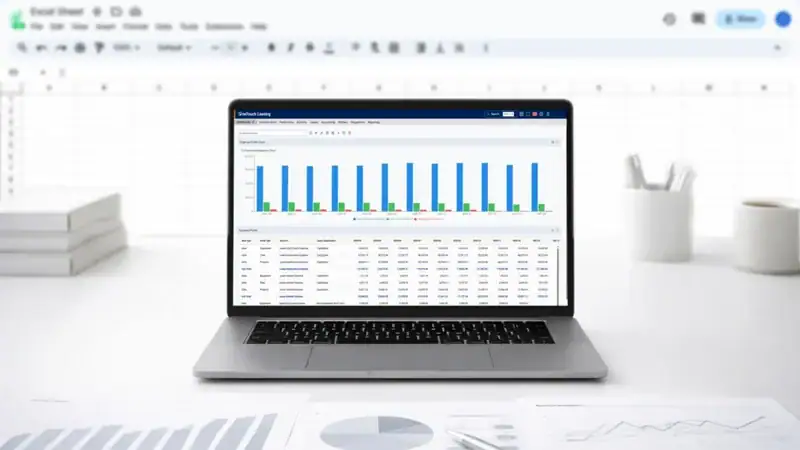
Many organisations still manage spreadsheet lease accounting by default. What feels manageable with ten leases often becomes difficult to control with fifty, one hundred, or several hundred leases spread across multiple entities.
Accounting firms increasingly treat manual, spreadsheet-based processes as a growing operational and compliance risk, largely because of how much time gets spent validating calculations, reconciling inconsistencies and tracing supporting data during reviews and audits. That concern is not just anecdotal: research reviewing spreadsheet quality across business applications found that 94% of business spreadsheets contain critical errors.
Common concerns firms raise about spreadsheet lease accounting include:
- Formula errors
- Broken links and corrupted files
- Version control issues
- Duplicate or inconsistent data
- Limited audit trail visibility
- Key-person dependency
- Manual journal preparation
Lease modifications and reassessments often require extensive spreadsheet updates, and each update is another opportunity for error to creep in. As portfolios grow, maintaining confidence in spreadsheet calculations becomes progressively harder, which is why more firms are encouraging clients to adopt a more controlled, scalable approach.
How Lease Accounting Software Helps Reduce Risk and Improve Efficiency
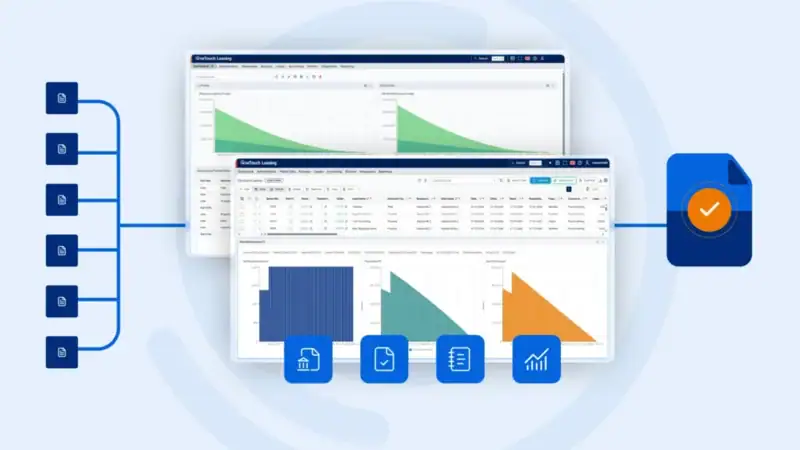
Lease accounting software centralises lease data, calculations and supporting documentation in one place, which helps organisations improve data integrity, reduce reliance on manual processes, and move toward more automated lease accounting as portfolios grow.
Automation removes much of the repetitive manual calculation and spreadsheet maintenance that lease accounting compliance otherwise demands. Purpose-built lease accounting software can typically help finance teams:
- Calculate lease liability and right-of-use asset values consistently
- Manage lease modifications and remeasurements
- Generate accounting journals automatically
- Produce disclosure reports
- Maintain supporting documentation in one system
Centralised lease management improves visibility across the whole lease portfolio, and standardised processes help strengthen governance and reduce operational risk. For accounting firms advising multiple clients, this shift toward automated lease accounting gives clients a more repeatable, sustainable way of managing lease accounting compliance, rather than rebuilding the same spreadsheet logic every reporting cycle. This is also where finance teams tend to see the clearest time savings.
Why Accounting Firms View Lease Accounting Software as an Audit Readiness Tool
For accounting firms, compliance is only part of the picture. They also care about how efficiently the underlying lease accounting information can be reviewed and validated.
Auditors increasingly expect:
- Clear supporting documentation
- Consistent methodologies
- Transparent calculations
- Evidence-based assumptions
Dedicated lease accounting software can support all of this through:
- A complete audit trail
- User activity tracking
- Calculation histories
- Lease document storage
- Change management records
These controls can be difficult to maintain consistently within spreadsheets. A strong audit trail helps auditors understand how balances were calculated, when changes occurred, and why assumptions were updated, making it easier to demonstrate what auditors look for under Section 20 of FRS 102. This can reduce year-end disruption and speed up audit procedures. For accounting firms, that often means more efficient reviews and fewer hours spent validating lease data and supporting calculations, particularly where the audit trail behind a lease liability figure needs to be reconstructed from scratch each year.
What Accounting Firms Look for in Lease Accounting Software
When firms evaluate lease accounting software for clients, a few priorities tend to come up consistently:
| What firms prioritise | What it means in practice |
| Data integrity and a single source of truth | One place for lease contracts, calculations and supporting records, reducing dependence on scattered spreadsheets |
| Automated lease accounting calculations | Consistent handling of lease liability, right-of-use asset, depreciation, interest and lease modifications |
| Strong audit trail and governance | Tracked changes, assumptions and supporting documentation that make audits and reviews more efficient |
| Flexible handling of complex portfolios | Support for property, vehicle and equipment leases across multi-entity, evolving portfolios |
| Efficient reporting and journal generation | Journals, disclosures and audit-ready reports produced without manual rebuilding each period |
| Integration and long-term scalability | Connects with existing finance systems and supports lease accounting compliance as portfolios grow |
These aren’t just external checklist items. Internal finance teams tend to land on the same priorities once they’re the ones responsible for maintaining the numbers day to day, which is often what turns a firm’s recommendation into an internal decision to act on it.
How to Build Stronger Lease Accounting Processes Beyond the Initial Transition
The revised FRS 102 lease accounting requirements are prompting many organisations to rethink how lease accounting gets managed day to day, well beyond the point of initial transition.
As lease accounting becomes more complex, moving to dedicated lease accounting software is becoming a practical, rather than optional, part of how firms help clients stay compliant while building stronger financial controls over time.
For organisations preparing for the revised FRS 102 lease accounting requirements, OneTouch Leasing helps finance teams move beyond spreadsheet lease accounting with flexible, audit-ready lease accounting software designed to support compliance, strengthen financial controls and streamline ongoing reporting.
Talk to our team to see how OneTouch Leasing can simplify lease accounting beyond the initial transition.
Frequently Asked Questions
Not necessarily. Organisations can continue using spreadsheets or other manual processes, but many accounting firms recommend dedicated lease accounting software because it can help manage growing lease portfolios, reduce spreadsheet risk and support ongoing compliance.
Yes. The revised FRS 102 standard does not require organisations to use lease accounting software. However, spreadsheets can become increasingly difficult to manage as lease portfolios grow, particularly when handling lease modifications, remeasurements, reporting and audit requirements.
Look for software that can automate lease accounting calculations, manage lease modifications and remeasurements, generate journals and disclosures, maintain supporting documentation, and provide a complete audit trail.