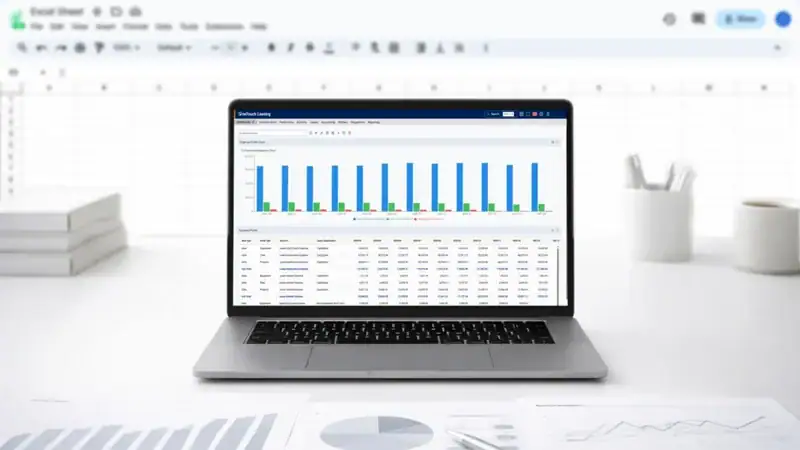
For many UKI organisations, Excel has long been the practical choice for managing lease data. It’s familiar, low-cost, and flexible enough to support the previous FRS 102 operating lease model, which involved infrequent updates and relatively modest data requirements.
But the revised FRS 102 standard for lease accounting, effective from 2026, changes the landscape entirely. This shift significantly increases data volume and update frequency. It also demands consistent judgement, making traditional spreadsheet-based processes more difficult to maintain.
Finance teams are already working with limited resources under increasing audit scrutiny. A more demanding standard amplifies this pressure. That’s why understanding where Excel begins to fall short is the first step in assessing whether it can still support reliable FRS 102 lease accounting.
How the revised FRS 102 requirements create new pressures for Excel users doing lease accounting
The revised FRS 102 brings lease accounting closer to the IFRS 16 framework:
- ROU assets and liabilities must be recognised for most leases.
- Remeasurements become routine events whenever terms, indices, assumptions or options change.
- More granular disclosures are required, demanding consistent, repeatable outputs.
- Greater judgement is expected around discount rates, economic incentives, and lease terms.
This shifts lease accounting from an annual exercise to a continuous, monthly process. Excel was never designed for this type of structured, audit-ready environment. Its flexibility becomes a weakness when calculations interlock, assumptions change, and multiple stakeholders rely on consistent outputs.
Where Excel’s capabilities fall short under the revised FRS 102
Many finance teams know Excel’s limits, but the revised FRS 102 model makes those gaps impossible to ignore, particularly in the following areas.
1. Data volume and structure
The revised standard requires richer, more structured data for every lease. A typical portfolio may include property, vehicles, equipment, fit-outs, and IT assets, each with its own components, incentives, indexation, and options.
Excel cannot enforce:
- consistent data structures
- mandatory fields
- standardised naming conventions
- validation on inputs such as CPI/RPI, discount rates or lease terms
As lease volumes grow, the risk of miscoded assumptions, inconsistent templates and conflicting file versions increases significantly, particularly across multi-entity groups.
2. Formula fragility and calculation risk
ROU asset and lease liability schedules depend on long, interconnected formula chains. Even a small modification, such as indexation, extension, early termination, or revised discount rate, requires recalculations across multiple tabs.
The risks are clear:
- a single broken formula can silently corrupt future calculations
- hard-coded values create hidden inconsistencies
- circular references disrupt remeasurements
- inherited spreadsheets become “black boxes” that no one fully understands
This fragility becomes a significant audit risk, as undocumented formulas and unclear logic make it difficult to evidence calculations under the revised FRS 102.
3. Lack of controls, governance, and audit trail
Auditors will expect clear evidence of:
- who changed what
- when the change occurred
- why the change was made
- whether the change was reviewed or approved
Excel inherently provides none of this.
Uncontrolled versions stored on local drives, email or shared folders make it difficult to evidence governance. This creates material operational and reputational risk and undermines audit defensibility, which is becoming a central focus under the revised standard.
Spreadsheets also make it difficult to demonstrate management oversight, which is increasingly important as auditors scrutinise how organisations apply judgement under the revised FRS 102.
4. Operational burden on finance teams
Monthly ROU depreciation, interest, ongoing lease reassessment and expanded disclosures create a heavy operational load.
In Excel, this means:
- recalculating schedules manually
- updating journals across multiple entities
- rebuilding disclosure packs
- rechecking formulas after every modification
Month-end slows, pressure rises, and teams spend valuable time maintaining spreadsheets instead of analysing results.
For many organisations, lease modifications are the point where Excel begins to fall out of alignment with the revised FRS 102. Taken together, these pressures signal that a more structured and controlled approach to lease accounting is now required.
If Excel isn’t enough for FRS 102, what’s the alternative?
Lease accounting software is the best alternative when Excel can no longer support the control, consistency and auditability expected under the revised FRS 102. It offers a structured and repeatable way to manage leases that aligns with the standard’s expectations and reduces reliance on manual workarounds.
A purpose-built, FRS 102-compliant lease accounting software provides:
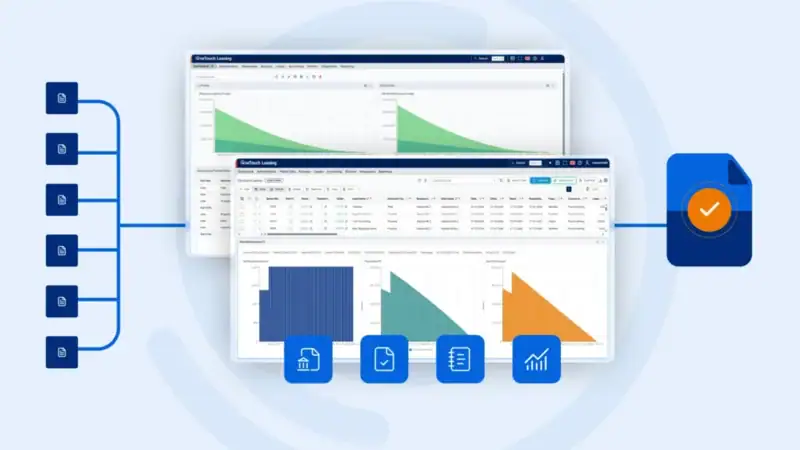
- a single, consistent structure for recording and maintaining lease data
- automated calculations that apply policy and assumptions uniformly
- controlled processing of modifications and remeasurements
- an audit trail that evidences every change across the lease life-cycle
- month-end routines that rely less on manual checks and reconciliations
- governance features that support compliance across multiple entities
Together, these capabilities give finance teams a sustainable way to remain compliant without depending on fragile spreadsheets.
It’s time to move beyond Excel for FRS 102, and OneTouch Leasing can help
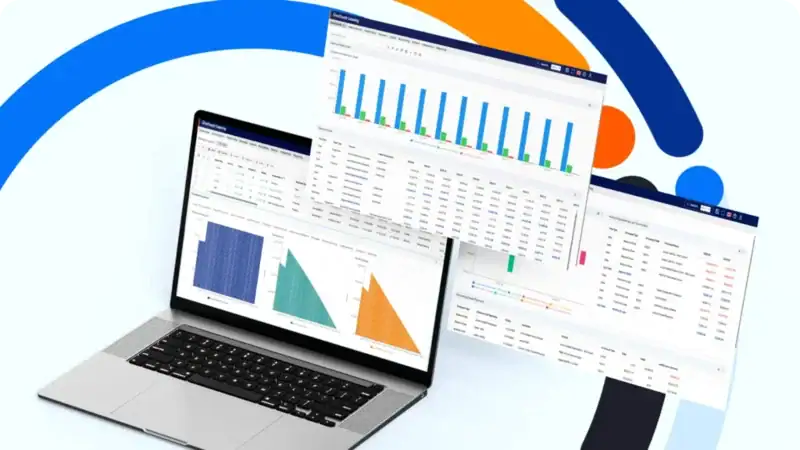
When Excel can no longer meet the demands of the revised FRS 102, OneTouch Leasing offers a practical, purpose-built alternative that strengthens control, supports compliance and eases the operational burden on finance teams.
OneTouch Leasing provides:
- intuitive workflows
- rapid deployment
- flexible functionality
- AI-assisted capture
- transparent pricing
Talk to our team and see how powerfully simple it can be to transition from Excel.