For many UK and Ireland finance teams, spreadsheet-based lease accounting has been the default approach for years. It requires no significant upfront investment, uses tools the team already knows, and for organisations with a small or stable lease portfolio, it has often been workable.
Revised FRS 102 changes that equation. From accounting periods beginning on or after 1 January 2026, most leases will need to be recognised on the balance sheet as right-of-use assets and lease liabilities. The result is a more active, ongoing accounting process requiring consistent calculations, documented assumptions, regular reassessments, and audit-ready outputs across the full lease lifecycle.
The key question is not whether spreadsheets can handle lease accounting in principle. The question is whether they can support that kind of controlled, repeatable process as complexity grows.
Why Spreadsheets Became Common for Lease Accounting
Spreadsheets became the default tool for lease accounting for practical reasons.
- Widely available and familiar to finance teams
- Flexible enough to build custom lease models without specialist software
- Low upfront cost compared with dedicated systems
- Manageable for smaller portfolios or where lease accounting was mainly an annual disclosure or reconciliation exercise
The previous FRS 102 lease accounting model did not demand the same level of ongoing data governance, calculation frequency, or audit trail documentation the updated FRS 102 requires. For many organisations, a well-maintained spreadsheet was proportionate to the reporting obligation.
Why Revised FRS 102 Increases Pressure on Spreadsheet-Based Lease Accounting
Revised FRS 102 fundamentally changes the nature of the task.
Where lease accounting was previously a periodic exercise for many organisations, it now becomes a more active balance sheet process. Finance teams will need to recognise and maintain lease liabilities and right-of-use assets, apply consistent assumptions across the portfolio, account for modifications, reassessments, and lifecycle events, and produce reliable, auditable outputs within tighter reporting timelines.
For spreadsheet users, calculation frequency increases, history needs to be preserved, and the margin for undocumented manual changes narrows considerably. Discount rates, lease terms, extension options, and reassessment triggers all require consistent treatment and traceable justification.
The revised standard does not break spreadsheet-based lease accounting overnight. It exposes weaknesses that may have been sustainable under a simpler model.
Common Spreadsheet Risks in Lease Accounting Compliance
The risks of relying on manual spreadsheet models are not theoretical.
As portfolios grow, spreadsheet models grow with them. Additional leases mean more rows, more calculation logic, more formula dependencies, and more manual maintenance. When a lease is modified, extended, or terminated, the finance team must recalculate the lease liability from the correct effective date while preserving the full history of prior calculations for audit and reporting purposes. Over time, spreadsheets become progressively harder to manage and verify.
Common warning signs that a spreadsheet-based approach is under strain include:
- Multiple spreadsheet versions in circulation
- Broken or overwritten formulas from manual updates
- Inconsistent methodologies across entities or asset types
- Manual workarounds for modifications and reassessments
- Fragmented or absent audit trails
- Difficulty reproducing prior-period calculations
- Month-end and year-end delays
- Reduced confidence in outputs when team members change
Key-person dependency is a particular concern. If FRS 102 lease accounting depends on one or two individuals who understand the spreadsheet’s structure, staff changes can become a governance risk with limited notice.
The Hidden Operational Costs of Spreadsheet Lease Accounting
The time and resource burden of managing leases manually builds in ways that are easy to underestimate.
Staff time spent maintaining, reviewing, correcting, and validating spreadsheet models is time diverted from other finance priorities. Supporting auditors through manual evidence preparation adds further demand. Additional review cycles arise from calculation errors or undocumented assumptions. The more complex the portfolio, the more the process absorbs.
Several studies have estimated that 80–90% of business spreadsheets contain some form of error, with risk increasing as models become larger, more manual, and more operationally complex. Full source references are listed at the bottom of this article.These figures matter particularly for FRS 102 lease accounting, where a missed modification, an incorrect discount rate, or an overwritten formula can affect reported balances, audit outcomes, and comparative figures across multiple periods.
The cost of maintaining a complex lease spreadsheet often exceeds initial expectations. The time spent creating, updating, and checking lease profiles, recalculating modification dates, and preserving calculation histories adds up. When reporting timelines are under pressure, those costs become difficult to absorb.
How Purpose-Built Lease Accounting Software Improves Control and Efficiency
Purpose-built lease accounting software addresses the core weaknesses of spreadsheet-based approaches directly. The table below sets out how the two compare across areas most relevant to revised FRS 102.
| Area | Spreadsheet Lease Accounting | Purpose-Built Lease Accounting Software |
| Calculation Automation | Manual formulas and linked worksheets. Modifications and reassessments require manual recalculation. | Automated lease liability and ROU asset calculations. Modifications and reassessments recalculated automatically from the correct effective date. |
| Data Management | Lease data, assumptions, and documents spread across multiple files and versions. | All records, assumptions, and documentation centralised in one system. |
| Audit Trails and Version Control | Changes are difficult to track. Audit evidence assembled manually. Multiple versions create uncertainty. | Version history, user activity, and audit trails maintained automatically as part of normal operation. |
| Consistency of Methodology | Assumptions, discount rates, and lease term treatments may vary across users, entities, or asset classes. | Standardised methodologies applied consistently across the full portfolio. |
| Reporting and Month-End Close | Journals, schedules, and disclosures compiled manually, increasing reconciliation effort and close risk. | Journals, schedules, and disclosures generated from the same source data for a faster, more controlled close. |
| Scalability | Spreadsheet complexity grows with the portfolio and becomes progressively harder to manage and hand over. | Designed to scale. Adding leases or entities does not increase manual complexity in the same way. |
| Audit Support | Significant time spent preparing supporting evidence and reproducing prior-period workings for auditors. | Structured records and calculation histories make audit support more efficient and less reliant on manual preparation. |
This comparison highlights a fundamental shift. As lease accounting becomes more complex under revised FRS 102, finance teams require systems that provide control, consistency, and auditability—areas where manual spreadsheet processes often fall short.
Why Lease Accounting Software Is Becoming More Important Under Revised FRS 102
The updated FRS 102 model is manageable. However, it places greater operational demands on finance teams, and spreadsheet-based processes that once worked may no longer keep pace.
The hidden costs of spreadsheet lease accounting accumulate over time: staff hours, audit support, manual corrections, version control failures, and key-person dependencies. Purpose-built lease accounting software replaces these recurring costs with a more controlled, consistent, and auditable way of managing leases across the full portfolio.
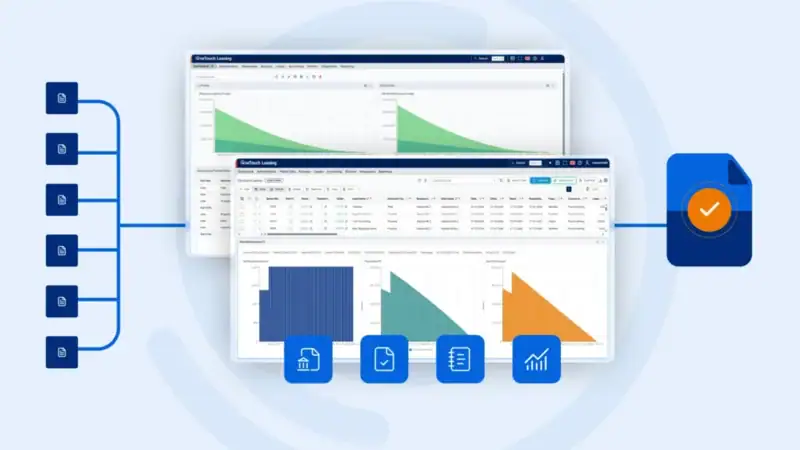
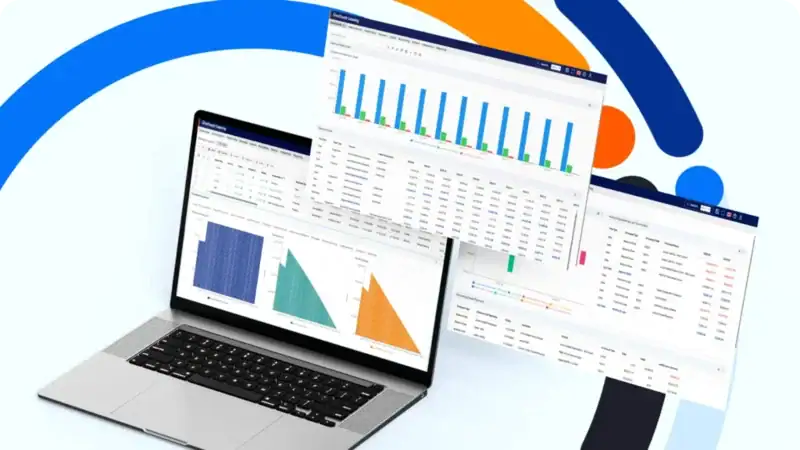
OneTouch Leasing is a purpose-built lease accounting platform designed for UK and Ireland businesses navigating the revised FRS 102 environment. It replaces large, manual spreadsheet models with a flexible, user-controlled system that fits around existing finance processes and supports accurate, audit-ready reporting as portfolios evolve.
For a full breakdown, see our comparison of spreadsheet lease accounting vs. purpose-built software under the revised standard.
To find out more, visit the OneTouch Leasing website or speak with the team.
References
Study finds 94% of business spreadsheets have critical errors – https://phys.org/news/2024-08-business-spreadsheets-critical-errors.html
88% of the Excel spreadsheets have errors – https://www.cassotis.com/insights/88-of-the-excel-spreadsheets-have-errors
Spreadsheet errors can have disastrous consequences, yet we keep making the same mistakes – https://theconversation.com/spreadsheet-errors-can-have-disastrous-consequences-yet-we-keep-making-the-same-mistakes-219356
| Area | Spreadsheet Lease Accounting | Purpose-Built Lease Accounting Software |
| Calculation Automation | Relies on formulas, linked worksheets and manual maintenance. Recalculations following modifications or reassessments often require manual intervention. | Automates lease liability and right-of-use asset calculations. Modifications and reassessments are recalculated from the correct effective date automatically. |
| Data Management | Lease data, assumptions and supporting documents may be spread across multiple files, folders and versions. | Centralises lease records, assumptions and supporting documentation in one system. |
| Audit Trails & Version Control | Changes may be difficult to track, and audit evidence often needs to be assembled manually. Multiple versions can create uncertainty over which file is current. | Maintains version history, user activity tracking and audit trails as part of normal system operation. |
| Consistency of Methodology | Different users, entities or asset classes may apply assumptions inconsistently, creating governance challenges. | Applies standardised methodologies across the lease portfolio, helping ensure consistent treatment of assumptions and calculations. |
| Reporting & Month-End Close | Journals, schedules and disclosures are often compiled manually, increasing reconciliation effort and review time. | Generates journals, amortisation schedules and disclosure reports from the same source data, supporting a faster and more controlled close process. |
| Audit Effort | Finance teams often spend significant time preparing supporting evidence and explaining calculations to auditors. | Structured records and calculation histories make supporting audits more efficient and less reliant on manual evidence gathering. |