The biggest challenges in FRS 102 lease accounting implementation rarely come from the accounting rules themselves. Finance teams struggle because lease data was never designed to support a permanent, judgement-heavy balance sheet process. What was once a disclosure exercise is now an ongoing requirement to evidence lease terms, justify discount rates and reassess assumptions when challenged.
As organisations work through transition, the focus is understandably on achieving technical compliance and meeting reporting deadlines. But data readiness is not simply a preparatory task to enable go-live. It is the factor that will determine whether lease accounting remains controlled, explainable and predictable months and years after transition. The objective is not simply to complete implementation, but to ensure the model remains controlled and sustainable thereafter.
What Happens When Lease Data Is Not Structured Properly?
Weak data foundations rarely cause immediate failure. Instead, the consequences surface gradually and compound over time, typically emerging in the following ways:
Audit scrutiny increases, and reporting slows
- Audit queries increase year after year
- Responses become slower and less consistent
- Assumptions are applied inconsistently across the portfolio
Past judgements must be rebuilt under pressure
- Lease term assessments must be recreated
- Discount rate approaches must be re-justified
- Original rationale is gradually lost
Control weakens when knowledge sits with individuals
- Staff turnover breaks continuity
- Knowledge leaves with the preparer
- Confidence in reported numbers erodes
Individually, these issues seem manageable. Collectively, they create recurring cleanup work, increase audit friction and unnecessarily involve senior finance in matters that should already be controlled. Lease accounting shifts from a predictable reporting process to an ongoing source of inefficiency.
Why Lease Contracts Alone Do Not Ensure FRS 102 Compliance
A common response to data readiness concerns is: “We have all the lease agreements. Everything is covered. We’re fine.”
It sounds reassuring. Unfortunately, possession of contracts does not equate to control.
Lease agreements define legal terms. They do not capture the judgements that drive the accounting outcome.
Contracts do not capture:
- Lease term assumptions, including which extension or break options are reasonably certain
- The discount rate methodology applied, or the evidence supporting it
- How critical judgements were reached, reviewed and approved
When contracts are treated as “the data”, those judgements inevitably migrate elsewhere. They sit in spreadsheets or working papers. They remain inside the heads of individuals. Assumptions are applied inconsistently, and audit trails weaken over time.
This creates a false sense of security. The organisation may have the paperwork, but it does not necessarily have control.
Under the revised FRS 102 framework, lease accounting requires structured, repeatable and defensible inputs. Documentation alone is not governance.
Why Data Problems Escalate After FRS 102 Go-Live
Lease accounting under revised FRS 102 is not a static calculation completed at transition but a lifecycle process.
Leases are modified. Payment profiles change. Extension assumptions are revisited. Auditors return to prior-year judgements and ask for consistency.
Where data is not structured and governed, each of these events becomes a manual reconstruction exercise. Remeasurements must be rebuilt. Assumptions are revisited without clear reference points. Small inconsistencies begin to accumulate across reporting periods.
The result is not a single breakdown but increasing operational strain. Effort rises rather than falls. Complexity grows rather than stabilises. Without a structured foundation, the model becomes harder to sustain with each reporting cycle.
What Strong Data Readiness Looks Like
Strong data readiness is not about collecting more documentation. It is about designing a control model that can be sustained over time.
At its core, a strong data readiness model requires three elements.
Clear ownership of lease data
- Defined responsibility within the finance function
- Formal review and approval controls
- Accountability for ongoing updates and reassessment
Consistent, structured data
- Standardised fields across the portfolio
- A defined and documented discount rate framework
- Clear treatment of exemptions and practical expedients
Documented, repeatable judgements
- Lease term decisions recorded with rationale
- Discount rate methodologies supported with evidence
- Reassessment triggers identified and tracked
When these elements are in place, compliance becomes predictable. Audit discussions are shorter and more focused. Reporting cycles stabilise. Most importantly, lease accounting becomes a stable and repeatable process rather than a recurring exercise in reconstruction.
How to Build Sustainable FRS 102 Lease Data Governance
The most common strategic mistake is treating data readiness as a transition milestone rather than an operating responsibility.
Implementation creates urgency. Reporting deadlines dominate attention. The objective becomes reaching go-live. But once the initial balances are posted, the real work begins. Lease accounting under revised FRS 102 requires continuous governance, not periodic correction.
To avoid recurring strain, data readiness must be embedded into day-to-day lease accounting.
That means using systems and processes that:
- Maintain structured, audit-ready lease data over time
- Support consistent judgement and documentation
- Adapt as leases are modified and portfolios evolve
For UKI and Ireland businesses applying the revised framework, this is not about introducing additional process. It is about strengthening the structure that already exists and removing operational fragility.
What Ultimately Determines a Successful FRS 102 Transition
The success of an FRS 102 implementation is not defined by whether the opening journals reconcile. It is defined by whether the underlying lease data can withstand modification, reassessment and scrutiny from the first reporting cycle onward.
Transition may appear complete once the initial balances are posted. In reality, it is either secured or undermined by the strength of the data structure that supports it.
That is why data readiness does not simply support transition. It determines whether it succeeds.
Supporting Long-Term FRS 102 Data Readiness
If transition success depends on structured, defensible lease data, then maintaining that structure requires the right system.
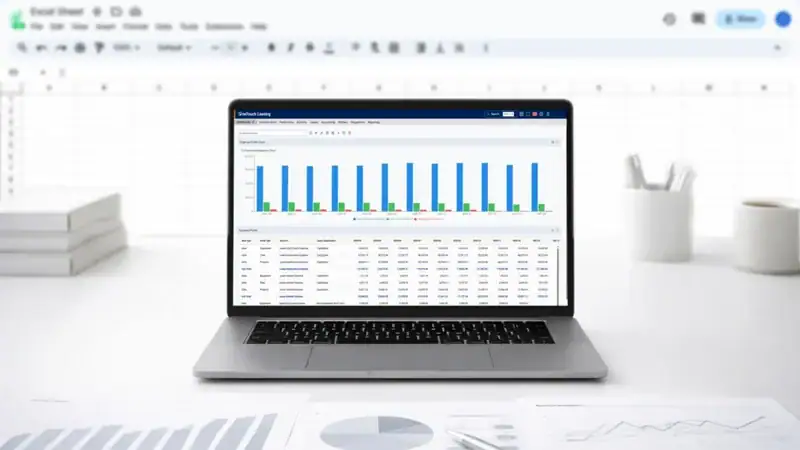
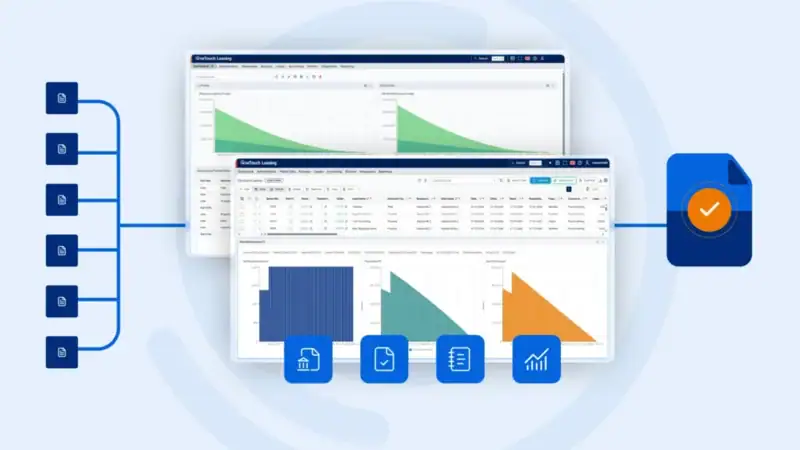
OneTouch Leasing centralises lease data, enforces consistent methodologies and supports controlled remeasurement as leases change. It replaces fragmented spreadsheets with a single, UK GAAP-aligned environment built specifically for revised FRS 102.
In practice, this means lease accounting becomes stable, repeatable and easier to manage across reporting cycles.
If you would like to understand how One Touch Leasing supports long-term data readiness under revised FRS 102, you can speak with our team here: https://onetouchleasing.co.uk/contact-us/
Need support with your FRS 102 lease transition?
Lease accounting software built for UK FRS 102 can help support consistent processes and audit readiness as portfolios and teams evolve.